Tracking the Northern Travelers: The Legacy of the Sandhill Crane Banding Project

We were contacted in January 2025 by Andy Gossens from the International Crane Foundation in Nebraska about a curiously colored band on a Sandhill Crane. The prior spring on April 2, 2024, photographer Colleen Childers, was in a Crane Trust photography blind along the Platte River near Doniphan, NE observing a gathering of 10,000 Sandhill Cranes. She took several photos of the birds and noted a particular crane with a yellow band on the upper right leg labeled “1E5”, and a smaller metal band near the foot of the left leg. The band number was reported to the USGS Bird Banding Lab database, and it was discovered that this adult male crane was banded on July 26, 2006, making it at least 19 years old at the time it was sighted! But even more exciting was that this Sandhill Crane was banded here at Creamer’s Field Migratory Waterfowl Refuge! Sandhill Cranes are one of two species of large cranes in …

Waterfowl Research at the Refuge: Fall Migration

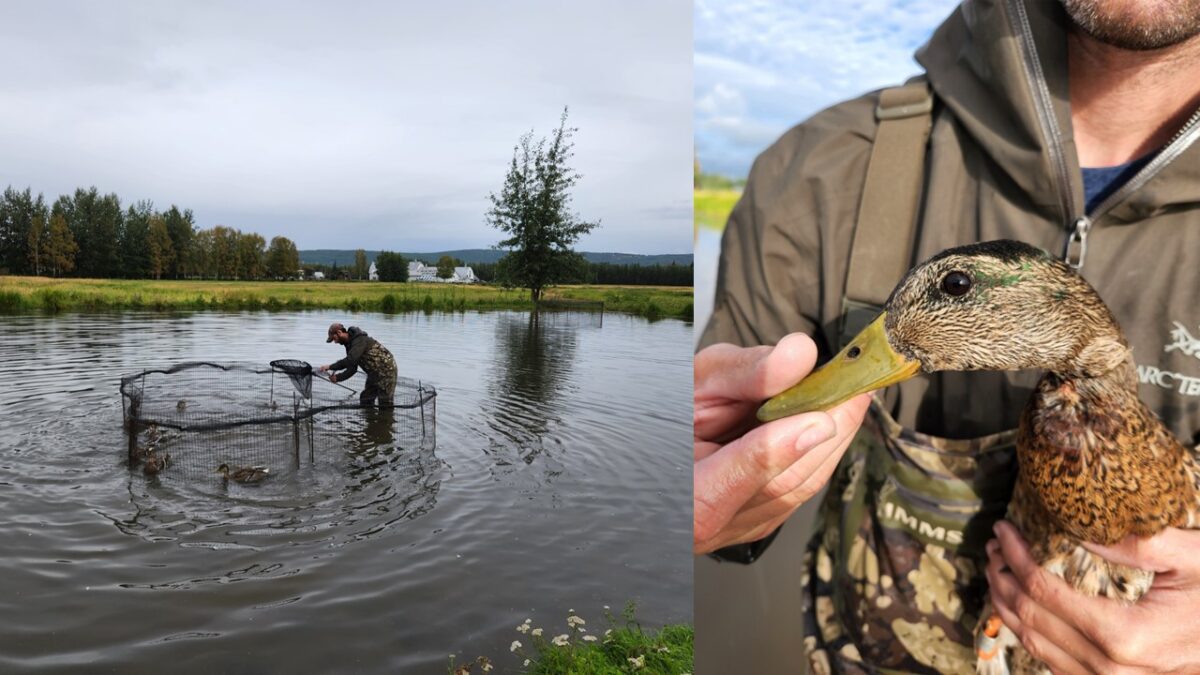
Waterfowl banding occurs all throughout North America and is a useful tool in the monitoring of waterfowl species. As fall migration was getting underway, the Alaska Department of Fish and Game (ADF&G) conducted waterfowl banding throughout Alaska with a statewide goal of banding 6,000 Mallard ducks. Typically, the Interior banding effort is performed at a banding station on Big Minto Lake. However, due to high water levels, wildfires in the Interior, and equipment availability, the 2022 fall banding operation occurred at Creamer’s Field Migratory Waterfowl Refuge. The operation at the refuge was headed by ADF&G Wildlife Technician, Nate LaShomb, along with other banders and volunteers from ADF&G, the U.S. Fish & Wildlife Service, and the University of Alaska Fairbanks. The ducks were captured using a swim-in trap technique (right photo). This involves a baited trap that acts much like a crab pot in which the birds were allowed to enter the trap via an opening but are unable to leave …